
No products
Prices are tax excluded
Analytical Instruments
- Alcoholimetry
- Water
- Analisadores NIR
- Pool Water Testing Equipment | Pool Water Analysis Tools
- pH Meters
- Dairy products
- AW
- Chlorine Meters
- Conductivity Meters
- ORP/REDOX Meter
- TDS Meters
- Oxygen Meters for Measurement in Air and Dissolved Oxygen (OD or DO)
- Salinity Meters
- Measuring KITS
- Fluoride
- Formaldehyde
- Glicose
- TPM (Total Polar Material)
- Turbidity
- Fruit Firmness Testers
- Refractometers
- pH Electrodes for Laboratory and Process Applications
- Buffers, Standards and Electrolytes
- Microbiology
- Spectrometer
- Hardness tester
- Medidores de Brilho (Glossmeters)
- Digital Coating Thickness Gauges
- Thickness measurement
New products
-

Professional Monitoring System Perseus Monitoring 150
Professional Monitoring for 19" Racks, Server Rooms and Data Centres The...
698,90€ -

Water Leak Detection Sensing Cable - WLD-Sensing Cable A
Water leak detection along the entire protected area The HW group...
127,50€ -

DIN Rail Industrial Monitoring and Control - Perseus Industrial 310
The Perseus Industrial 310 is a LAN monitoring unit designed for...
587,70€ -

LAN/LTE Remote Monitoring Starter Set - Perseus Monitoring 145 Tset
The Perseus Monitoring 145 is designed for professional remote site...
781,60€ -

Modbus RTU to TCP Ethernet Gateway - Perseus Energy 240
Industrial Ethernet Gateway for Advanced Monitoring The Perseus Energy...
327,50€ -

Sensor for One Digital Temperature and Humidity or CO2 Probe with Ethernet and PoE TA361
The TA3611 is a flexible Ethernet sensor designed to connect one...
330,00€ -

Ultrasonic Flow Meter with 32 GB Memory PCE-TDS 200 S
The PCE-TDS 200 S is a portable ultrasonic flow meter designed to...
2 249,00€ -

Anemometer with 4-20 mA Analog Output PCE-WS-A
The PCE-WS A is a professional anemometer designed for applications...
199,90€ -

Fruit Firmness Tester for Blueberries, Raspberrys, Grapes and Strawberries
The BAXLO 53505/F0 fruit firmness tester is designed to measure the...
493,03€ -

Ultrasonic Sensors for DN 50 ... 700 PCE-TDS 200 M SENSOR
The PCE-TDS 200 M SENSOR is an ultrasonic sensor set developed for...
359,90€ -

Ultrasonic Flow Meter with Thermal Energy Measurement PCE-TDS 200 Plus S
The PCE-TDS 200+ S is a portable ultrasonic flow meter designed to...
3 269,90€ -

Ethernet data logger for continuous temperature and humidity monitoring TCW210-TH
The TCW210-TH is a professional temperature and humidity data logger for...
141,60€ -

Ultraviolet radiation measurement with external sensor PCE-UV34
The PCE-UV34 is a professional UV meter designed for precise ultraviolet...
229,90€ -

Analogue Thermo-Hygrometer 45.2041
The 45.2041 analogue thermo-hygrometer is a practical and elegant...
11,40€ -

Remote IO Module with SNMP v1 for Monitoring and Control
The TCW122B-CM is a remote IO module designed for environmental...
87,80€ -

Waterproof Temperature Data Logger TG-4105
The Tinytag Splash 2 TG-4105 is a waterproof high temperature data...
225,00€ -

Ultrasonic Hardness Tester PCE-5000
The PCE-5000 is a professional ultrasonic hardness tester for metals...
5 906,90€ -

Moisture Meter for Building Materials PCE-PMI 4
PCE-PMI 4 Moisture Meter for Building Materials The PCE-PMI 4 is a...
499,90€ -

Professional Breathalyzer Certified EN 15964 Zaphir AT-4000
Professional Breathalyzer The Zaphir AT-4000 is a professional portable...
199,00€ -

Ultrasonic Thickness Gauge PCE-CT 1000
For Multilayer Measurement and Coating Inspection The PCE-CT 1000...
1 849,90€ -

Ultrasonic Thickness Gauge PCE-TG 300-NO7
Ultrasonic Thickness Gauge The PCE-TG 300-NO7 is a professional...
1 109,90€ -

Digital Force Gauge 200 N Tension and Compression Testing with USB
Digital Force Gauge | 200 N Tension and Compression Testing with USB The...
359,90€ -

USB Temperature Data Logger with LCD Screen EL-USB-1-LCD
EasyLog EL-USB-1-LCD | USB Temperature Data Logger with LCD Screen The...
75,00€ -

PCE-3500 UCI Hardness Tester for Non-Destructive Metal Testing PCE-3500
UCI Hardness Tester The PCE-3500 hardness tester is a professional...
3 789,90€ -

Termómetro Infravermelho com Bluetooth e Sonda de Inserção
Infrared Thermometer & Penetration Probe With integrated Bluetooth...
119,90€ -

Infrared thermometer with USB interfac PCE-890U
Infrared thermometer with USB interface for real-time data monitoring...
294,90€ -

Infrared Thermometer with Data Logger and Printer – PCE-JR 911
Infrared Thermometer with Printer The PCE-JR 911 is a professional...
479,90€ -

Bluetooth Barcode Scanning Thermometer MM7000-2D
MM7000-2D – Bluetooth Barcode Scanning Thermometer The MM7000-2D...
413,68€ -

Fish fillet salinity meter PAL-Fish Fillets 4225
Fish Fillet Salinity Meter – PAL-Fish Fillets The PAL-Fish Fillets (Ref....
547,00€ -

Professional Moisture Meter for Wood and Building Materials PCE-WP24
Detect moisture without damage. Work with professional confidence. The...
726,90€ -

Coating Thickness Gauge – Separate Probe Model Elcometer A456CFSS
Elcometer 456 Coating Thickness Gauge – Separate Probe ModelThe...
531,00€ -

Glossmeter Elcometer 480 Model T 20º, 60° e 85º J480T-268
Elcometer 480 Glossmeter Model T The Elcometer 480 Glossmeter is...
3 162,00€ -

Glossmeter Elcometer 480 Model T 20º and 60° J480T-26
Elcometer 480 Glossmeter Model T The Elcometer 480 Glossmeter is...
2 312,00€ -

Carbon Monoxide (CO) Data Logger EL-USB-CO
Carbon Monoxide (CO) Data Logger The EasyLog EL-USB-CO is a professional...
105,00€ -

4-in-1 Analog Refractometer KERN ORA 4FA
Analog RefractometerThe KERN ORA 4FA analog refractometer is a...
65,00€ -

Mirror Gloss Calibration Tile Nominal Value: 1900GU at 20°
Mirror Gloss Calibration Tile with calibration certificate; nominal...
394,91€ -

High Gloss Calibration Tile Nominal Value: 97GU at 60°
High Gloss Calibration Tile with calibration certificate; nominal value:...
394,91€ -

Mid Gloss Calibration Tile Nominal Value: 55GU at 60°
Mid Gloss Calibration Tile with calibration certificate; nominal value:...
394,91€ -

Glossmeter Elcometer 480 Model B 60° J480B-6
Elcometer 480 Glossmeter Model B The Elcometer 480 Glossmeter is...
1 545,00€ -

Espectrómetro de Cores JCS 100
Versatile color spectrometer for professional use. The JCS 100 is a...
3 150,00€ -

Lux Meter with Internal Sensor SP 200K
SP 200K Lux Meter with Internal Sensor for Professional Light...
105,00€ -

Dewpoint Meter Elcometer 319-T
Elcometer 319 Dewpoint Meter The Elcometer 319 Dewpoint Meter is a...
926,00€ -

Moisture Analyzer DIS 100-3
Moisture Analyzer The DIS 100-3 moisture analyzer is designed for users...
1 800,00€ -

Earth Resistance Tester PCE-ET 3000
PCE-ET 3000 Earth Resistance Tester The PCE-ET 3000 earth resistance...
526,90€ -

Dewpoint Meter Elcometer 319-S
Elcometer 319 Dewpoint Meter The Elcometer 319 Dewpoint Meter is a...
757,00€ -

Ozone Meter with Alarm
PCE-OD 10 Environmental Controller The PCE-OD 10 is a compact 3-in-1...
47,90€ -

Sistema de Perfilagem de Temperatura para Fornos Referência: G215-DL
Elcometer 215 Oven Data Profiler – Professional Oven Temperature...
2 206,10€ -

Advanced Temperature, Humidity & Pressure Management Software TS Manager 3 PRO
TS Manager 3 is an advanced platform for temperature, humidity and...
1 990,00€ -

Pressure and Temperature Data Logger PressureDisk TS13PRD
Tecnosoft PressureDisk The Tecnosoft PressureDisk is a professional...
1 625,00€ -

Universal IO Module TCG140-4 4G LTE
The TCG140-4 is a 4G LTE universal IO module built for remote monitoring...
327,70€ -

Alarm Control Unit for Toxic and Explosive Gases S-Lx 03697
The S•Lx is an advanced alarm control unit designed to continuously...
2 537,00€ -

Oxygen Detector Addressable D-CAN Gen2 03757
D•CAN Gen2 | Addressable Oxygen Detector The D•CAN Gen2 is an oxygen...
397,00€

EMI, LDA, Edifício Estoril Office, Av. República 3000A, Esc. 19A, 2649-517 Alcabideche PORTUGAL
Analytical Instruments and Sensors measure critical parameters such as Glucose, protein, gluten, pH/ORP, chlorine, turbidity, fluoride, TDS, salinity, dissolved oxygen and conductivity in a wide variety of applications for reliable monitoring and control. EMI-LDA.com offers a broad portfolio of analytical instruments and sensors to help run labo...
Analytical Instruments and Sensors measure critical parameters such as Glucose, protein, gluten, pH/ORP, chlorine, turbidity, fluoride, TDS, salinity, dissolved oxygen and conductivity in a wide variety of applications for reliable monitoring and control. EMI-LDA.com offers a broad portfolio of analytical instruments and sensors to help run laboratories, HACCP, research, development and biosciences smoothly, efficiently and safely, allowing users to optimize costs.
Analytical Instruments There are 77 products.
Subcategories

Alcoholimetry
Breathalyzers: Precision and Safety in Alcohol Measurement
A breathalyzer is a high-precision device used to measure the concentration of ethanol in the body, known as Blood Alcohol Content (BAC). This measurement is performed quickly and non-invasively by analyzing the breath exhaled (Breath Alcohol Content – BrAC) during a blow.The detection of alcohol in the body is carried out using two main analytical methods: electrochemical sensor technology or infrared absorption, both widely recognized for their reliability and accuracy.
The scientific basis of breathalyzers lies in the physiological relationship between the alcohol concentration in alveolar air and the alcohol level in the blood. While this relationship may vary across countries due to physiological differences in the population, it allows for an effective conversion. In Portugal, it is established that 1 mg of alcohol per liter of exhaled air (BrAC) corresponds to 2.3 g of alcohol per liter of blood (BAC):
1 mg/L (BrAC) = 2.3 g/L (BAC)
Although breathalyzers are primarily used for monitoring alcohol levels in road traffic enforcement, their application has been expanding to other sectors. A growing number of companies are adopting this technology to enhance workplace safety, ensuring that employees are not under the influence of alcohol while performing their professional activities.
By implementing breathalyzers, organizations promote safety, responsibility, and risk prevention, making these devices essential allies in protecting lives and ensuring compliance with regulations.
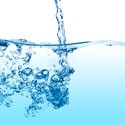
Water
Multi-parameter meters for water analysis, reagents and accessories designed for water analysis and treatment. Our highly accurate and easy-to-use pH, redox, chlorine, conductivity, dissolved oxygen, water analysis kits (acidity, alkalinity, ammonia, chlorine, hardness, oxygen, among others.)
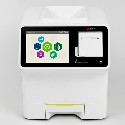
Analisadores NIR
Tradition of several decades of development of patent NIR analyzers.
Our NIR meters are accurate, and provide reliable data for industry and research. NIR analyzers have become an indispensable tool for fast and accurate monitoring and analysis in industrial processes to maintain consistent product quality, increase yield, maximize efficiency and minimize waste in food products.
Pool Water Testing...
Pool Water Testing Equipment
Maintaining clean, safe, and balanced water starts with the best pool water testing equipment. In our online store you will find a professional selection of pool water analysis equipment, including meters, reagents, and essential accessories to monitor your pool water parameters.
We offer a wide range of pH meters, chlorine testers, pool reagents, and water testing equipment designed to ensure optimal water quality and efficient pool operation throughout the year.
Our pool testing equipment is selected from trusted brands known for their accuracy, durability, and reliability. Whether for residential or commercial pools, we provide advanced solutions to monitor and control pool water quality.
Browse our category of pool water testing and analysis equipment and discover products that make pool maintenance easier, more efficient, and cost-effective.
Benefits of our pool water testing equipment
- High-precision water testing equipment
- Complete solutions for pool water analysis
- Equipment for residential and commercial pools
- Advanced technology for water quality monitoring
- Durable and easy-to-use products
Find the best pool testing meters and reagents and keep your pool clean, safe, and ready to enjoy at any time.
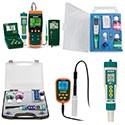
pH Meters
EMI LDA goal is to make pH testing easy and accessible to everyone. Professional pH instrument for special analyses, particularly in environmental, chemical, food and beverage industries. We can help you find the best device for pH measurements.
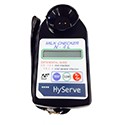
Dairy products
Solutions for the dairy industry, from milk collection, handheld milk analyzers and somatic cell counters that can respond quickly to the dairy industry's needs. Milk analyzer capable of rapid mastitis response. The milk analyzer is a suitable instrument for milk producers.
The latest innovation in the prevention of mastitis that makes possible the accurate diagnosis of subclinical mastitis.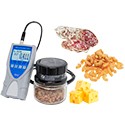
AW
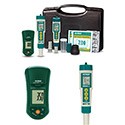
Water (AW) activity is an increasingly used parameter for quality control in preventing microbial reproduction, oxidation and product reactions, ensuring quality and shelf life of food, pharmaceutical and cosmetic products.
Chlorine Meters
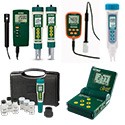
EMI LDA offer accurate and cost effective way to measure chlorine. Chlorine Meter provides a quick and easy measurement of free or total chlorine.
Conductivity Meters
Easy-to-use, waterproof and high-quality conductivity meters. Conductivity measurement is an extremely widespread and useful method, especially for quality control purposes.
Surveillance of feedwater purity, control of drinking water and process water quality, estimation of the total number of ions in a solution or direct measurement of components in process solutions can all be performed using conductivity measurements.The high reliability, sensitivity and relatively low cost of conductivity instrumentation makes it a potential primary parameter of any good monitoring program. Some applications are measured in units of resistivity, the inverse of conductivity. Other applications require the measurement of total dissolved solids (TDS), which is related to conductivity by a factor dependent upon the level and type of ions present.
Conductivity measurements cover a wide range of solution conductivity from pure water at less than 1x10⁻⁷ S/cm to values of greater than 1 S/cm for concentrated solutions.
In general, the measurement of conductivity is a rapid and inexpensive way of determining the ionic strength of a solution. However, it is a nonspecific technique, unable to distinguish between different types of ions, giving instead a reading that is proportional to the combined effect of all the ions present.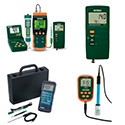
ORP/REDOX Meter
ORP, or Redox Potential, is a measurement of water’s ability to oxidize contaminants. The higher the ORP, the greater the number of oxidizing agents.
Checking ORP is a simple method to monitor the effectiveness of a sanitizer or the quantity of anti-oxidants in a liquid. In generalized terms for humans, a higher ORP is better for outside of the body, while a lower ORP is preferred for consumption due to the high anti-oxidant value.
There are numerous applications for ORP, each with its own specific optimum value. For example, the minimum ORP for pool & spa disinfection (set by the World Health Organization) is 650 mV. Though the WHO has not set a standard for ORP in drinking water, anything below -550mV is considered too strong and not recommended for drinking.
TDS Meters
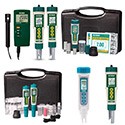
A TDS Meter indicates the Total Dissolved Solids (TDS) of a solution, i.e. the concentration of dissolved solid particles.
Dissolved ionized solids, such as salts and minerals, increase the electrical conductivity (EC) of a solution. Because it is a volume measure of ionized solids, EC can be used to estimate TDS. Dissolved organic solids, such as sugar, and microscopic solid particles, such as colloids, do not significantly affect the conductivity of a solution.
The most accurate way to measure TDS of water in a laboratory is to evaporate the water leaving behind dissolved solutes as residue and then weighing the residue.
Oxygen Meters for...
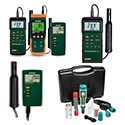
Oxygen saturation (symbol SO2) is a relative measure of the amount of oxygen that is dissolved or carried in a given medium. It can be measured with a dissolved oxygen probe such as an oxygen sensor or an optode in liquid media, usually water. The standard unit of oxygen saturation is percent (%).
Oxygen saturation can be measured regionally and noninvasively. Arterial oxygen saturation (SaO2) is commonly measured using pulse oximetry. Tissue saturation at peripheral scale can be measured using NIRS. This technique can be applied on both muscle and brain.
Monitoring of the oxygen amount in the air is, extremely important, since it is not always that harmless and too much oxygen in the air may indicate a dangerous situation. The measurement of oxygen is particularly important in the workplace monitoring and process control, medicine, food technology, ventilation and sport. We offer measuring devices and special sensors that can be used in wide applications.
Salinity Meters
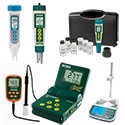
Salt meter range you can measure salt content following the direct method with the help of the optical Salinity meter.
The salt meter is suitable for measuring salt contents in aqueous solutions or viscous media. We recommend using the salinity to measure sea water or solutions with high salt content. With the indirect method you will obtain the conductivity value which will proportionally increase with the salt content.
You can choose between a salt meter for flowing or pure water (it is important for certain industries). We offer a salt meter with different conductivity measurement fields. It is important to know that a salt meter usually emits electric conductivity as a measurement value in µS/cm.
Measuring KITS
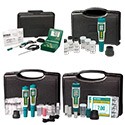
Kits for measuring conductivity, TDS, salinity, pH, mV, ORP, chlorine, STD and temperature.
Fluoride
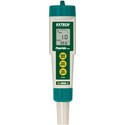
The chemical symbol fluorine F is very abundant in the earth's crust, representing about 300 mg/kg3 of its composition. It is the most electronegative chemical element of the periodic table and the most reactive, not being free, but always combined with calcium, sodium, aluminum, as fluoride (F-) and sometimes as part Of the composition of some silicates.
Fluorides are ubiquitous, present in the soil, forming part of the composition of many minerals, such as fluorite (CaF2), cryolite (Na3Al F6), fluorapatite Ca5(PO4)3 F; In air (particulate form) and dissolved in water.
Their existence in the environment is due in part to natural sources, including volcanic activity and marine aerosols and anthropogenic or man-made sources resulting from all man's activity, including the manufacture of steel, primary production of aluminum, copper and nickel production, pesticide production, the production and use of phosphate fertilizers, the manufacture of glass, ceramics, glue and adhesives etc.
Fluoride, which occurs in biological fluids such as fluoride ion F-. In cases of occupational exposure or food and water for human consumption, excessive levels of fluoride in the body may cause health risk. Fluoride is easily determined using the meters available from EMI LDA.
Formaldehyde
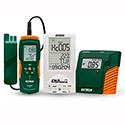
Formaldehyde is a volatile organic compound developed from methanol. Formaldehyde prevents the growth of microorganisms in products for the conservation of the same. At room temperature, formaldehyde is a colorless gas that evaporates easily, is highly flammable and reactive.

Glicose
Glucose can be measured in both Clinical Research and Industrial, Commercial & Biotechnology applications
Clinical & Research
Glucose can be measured in these areas:- Diabetes monitoring
- Diabetes clamp studies
- Clinical pathology
Industry & Biotechnology
Glucose can be measured in these areas:
- Biotechnology and pharmaceutical analysis
- Food and beverage analysis
TPM (Total Polar...
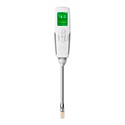
Measuring the TPM (Total Polar Material), the content of total polar components of oils for food preparation, determines the maximum point of use of the oil, avoiding saturation and leaving the prepared food suitable for the consumer. TPM quantifies the presence of polar molecules in the oil: the higher this percentage, the greater the level of degradation of that oil. We recommend that the oil be replaced when the TPM reaches 25%, in accordance with European legislation.
Cooking oil develops its best potential between 14% and 20% TPM. Using the TPM meter to detect when the oil should be replaced also ensures that there is no wasted oil and unnecessary costs.
Turbidity
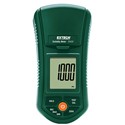
Turbidity meters are essential for use in the food industry, especially beverages such as water, wines and beers, as well as in the pharmaceutical industry. The use of a turbidity meter is indispensable in the process of measuring the substances.
The turbidity meters emit a beam of light on the sample and compare it to a standard. The most used measures are NTU Turbidity Units and FTU, Formazine Turbidity Units.
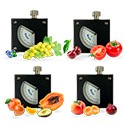
Fruit Firmness Testers
The Fruit Firmness Testers is an analyzer for controlling the degree of firmness of different types of fruit and vegetables. The meters provide the necessary information on the optimum harvest time and on the maturation process in conservation chambers, in transport and in the respective sale.
The firmness test gauges are ideal for quality control and in field testing and laboratory testing.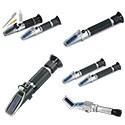
Refractometers
EMI offer one of the largest choices of refractometers, all refractometers are made to the highest standard. EMI's portable refractometers measure refractive index and other related values, such as, Brix, invert sugar, HFCS42 or HFCS55 or the freezing point of ethylene glycol and propylene glycol/water mixtures or other concentrations of a wide variety of liquids.
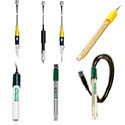
pH Electrodes for...
EMI's pH electrodes combine high accuracy and performance with ease of use. High precision and reliability as well as low maintenance make them the natural choice for a wide range of applications.
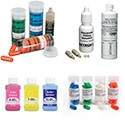
Buffers, Standards and...
Solutions for Calibration and Maintenance
The determination of pH, conductivity, ion concentration, redox potential and dissolved oxygen are common analyses in most laboratories. The measurement accuracy highly depends on the quality and operation of the solutions used for sensor calibration and maintenance. EMI takes pride in a long tradition of sales complete measurement systems, including a comprehensive range of top quality buffers, standards, electrolytes, cleaning and verification solutions.

Microbiology
EMI with a wide range of instruments and rapid tests for detection of pathogens.

Spectrometer
Spectrometer
The portable spectrometer is an advanced device designed to perform precise analyses and measurements on-site, for both known and unknown materials. Acting as a compact, mobile laboratory, this instrument effectively handles a wide range of analytical tasks with exceptional accuracy.
Equipped with a high-resolution matrix sensor, the spectrometer captures detailed measurement data, which is then processed by a specialized graphical algorithm and a high-performance signal processor. This advanced technology enables accurate detection of frequency-modulated, amplitude-modulated, and hybrid lattice patterns.
Combining the features of a densitometer and a spectrophotometer, the device can monitor and transmit real-time color and pressure measurements during the analysis process.

Hardness tester
Hardness Testing in Materials Science and Engineering
In the field of materials science and engineering, hardness testing plays a critical role in assessing a material's resistance to deformation. This property directly influences its durability, wear resistance, and overall performance in a wide range of applications. Understanding a material’s hardness is key to determining its suitability for specific functions.
The most commonly referenced hardness tests in material datasheets are Rockwell, Brinell, and Vickers. Among these, the Rockwell method is the most widely used due to its speed and simplicity, particularly in industrial settings. The Leeb and Knoop methods are more specialised and are less frequently cited in standard datasheets, as they are typically used in specific testing conditions and for particular applications.

Medidores de Brilho...
Glossmeters (Gloss Meters)
Glossmeters, also known as gloss meters, are precision instruments used to measure the gloss level or reflective properties of surfaces. These devices are widely used in industrial quality control to ensure a consistent surface appearance and finish.
A professional gloss meter measures the amount of light reflected from a surface at a specific angle. The most common measurement angles are 20°, 60°, and 85°. These readings help evaluate high-gloss, semi-gloss and matte finishes with accuracy.
Advantages of Gloss Meters
- Accurate and consistent gloss measurement
- Reliable quality control in industrial processes
- Portable and easy-to-use instruments
- Suitable for multiple materials and finishes
- Ideal for laboratory and production environments
Common Applications
- Automotive coatings and industrial paint
- Paints, varnishes and coatings
- Plastics and polymer manufacturing
- Metal and anodized surfaces
- Wood coatings and decorative finishes
- Paper, printing and packaging
- Ceramics and composite materials
Frequently Asked Questions About Gloss Meters
What is a gloss meter?
A gloss meter is an instrument used to measure the gloss level or reflective properties of a surface by analysing reflected light.
What is a glossmeter used for?
A glossmeter is used for surface quality control in industries such as coatings, plastics, automotive, metal, wood and printing.
What measurement angles are used in a gloss meter?
The most common angles are 20°, 60°, and 85°. Each angle is suitable for different gloss levels, from high-gloss to matte finishes.
Which materials can be measured with a gloss meter?
Gloss meters can be used on paint, varnish, plastic, metal, wood, paper, ceramics and many other finished materials.
How do I choose the right gloss meter?
You should consider the surface type, expected gloss level, required measurement angles and whether the instrument will be used in a lab, production line or inspection process.
Browse our range of professional glossmeters to find the right instrument for precise gloss measurement and reliable surface quality control.

Digital Coating...
Digital Coating Thickness Gauges
Digital coating thickness gauges are precision instruments designed to provide accurate, reliable and repeatable coating thickness measurements on a wide range of substrates. These instruments are widely used in industrial quality control, paint inspection, galvanizing, anodizing and corrosion protection applications.
Our range of digital coating thickness gauges allows users to measure Dry Film Thickness (DFT) on almost any metallic surface, including both ferrous and non-ferrous substrates. These gauges are suitable for measurements on steel, stainless steel, aluminium and other metallic materials, delivering consistent and dependable results in demanding industrial environments.
Depending on the substrate and coating type, different measurement principles are used:
- Electromagnetic induction – used to measure non-magnetic coatings on ferromagnetic substrates, such as paint or protective coatings on steel.
- Eddy current principle – used to measure non-conductive coatings on non-ferrous metal substrates, including aluminium and stainless steel.
Digital coating thickness gauges are essential tools in industries such as:
- Automotive manufacturing
- Metal fabrication and industrial production
- Surface treatment and finishing
- Industrial painting and protective coatings
- Inspection, maintenance and quality assurance
Using a digital coating thickness gauge helps ensure that coatings meet required specifications and industry standards, improving corrosion protection, coating durability and overall product quality.
Our selection includes robust, user-friendly and highly accurate coating thickness gauges, suitable for both laboratory and on-site inspection applications.
Thickness measurement
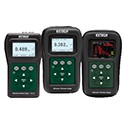
Thickness gauges for accurate measurement of substrate whether steel, iron or non-ferrous materials.
The thickness gauges of ferrous coatings are indicated to measure the thicknesses of paint, enamel, varnish, plastics, zinc, brass, chromium, among other types of non-magnetic coatings. In this type of measurement the device uses magnetic induction as a measurement method.
Thickness meters (non-ferrous) for non-ferrous substrates such as aluminum, brass, etc. Measures all types of insulating coatings such as paint, plastics, lacquers and others. In this type of measurement the apparatus uses as pulsed Eddy current measurement method.
Thickness gauges include a wide range of features available to improve accuracy. Ultrasonic thickness meters can measure virtually all materials, such as plastics, metals, metal materials, rubber and internally corroded materials.
 10,00€
Water Test Strips (pH, Free Chlorine,...
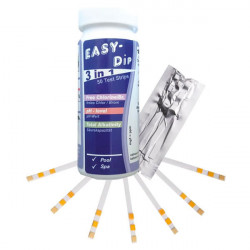
TSL100 test strips provide a fast, simple and cost-effective way to monitor key water parameters: pH, free chlorine, bromine and total alkalinity. Ideal for pools, spas and hot tubs, they help keep water balanced, comfortable and safe.
10,00€ 325,90€
pH electrode with a stainless steel...
Brand: Senseca This professional meat pH electrode with a stainless steel piercing blade penetration electrode is ideal for insertion into semi-solid materials or compost/soil in a wide variety of industries including food processing and agriculture.
325,90€ 62,10€
pH buffer solution set Senseca PHL4710
Brand: SensecaThis pH Calibration Buffer Solutions set ready made pH buffer solutions are in 4,01, 7,00 and 10,01 are suitable for checking pH instruments and pH electrodes on your range of pH meters and testers.
62,10€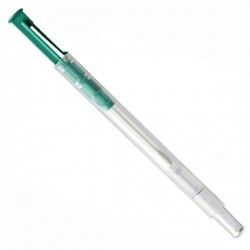 290,00€
Lucipac A3 Surface Sterile dry swabs for...
Brand: Kikkoman HyServe LuciPac A3 Surface detects A3 ATP+ADP+AMP to verify surface cleanliness with the Lumitester Smart. Delivery 100 swabs (20 x 5 in aluminum bags).
290,00€ 231,80€
Air oxygen sensor, closed sensor Senseca...
Brand: Senseca For low oxygen concentrations, suitable for GMH 369x. Measuring range of oxygen partial pressure between 0 to 1100 hPa O2 and Oxygen concentration between 0.0 to 100.0% O2 with an response time of T90 <10 s.
231,80€