No products
Prices are tax excluded
 View larger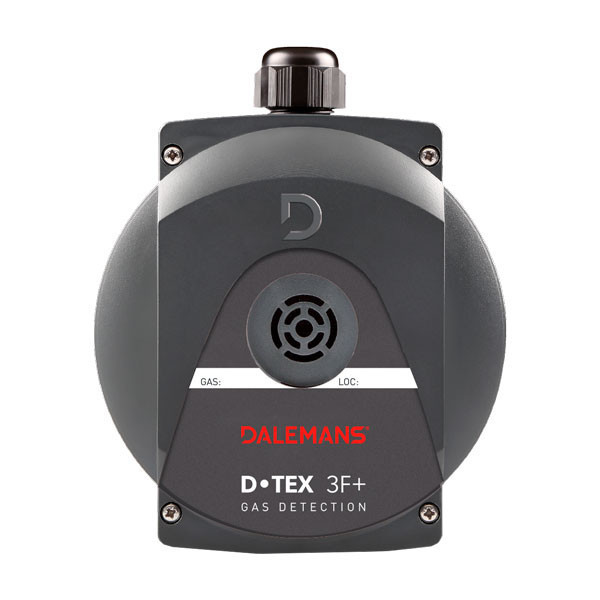
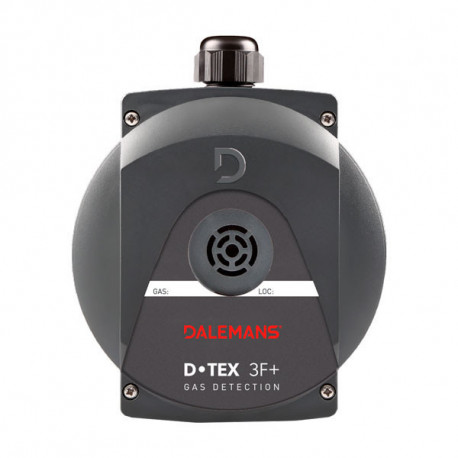
Catalytic Explosive Gas Detector Methane CH4 D-TEX 3F+ 01509
D-TEX 3F+ 01509
New product
Catalytic Explosive Gas Detector (Methane CH4) 0–100% LEL
The D•TEX 3F+ is a catalytic explosive gas detector engineered for continuous monitoring in boiler rooms and technical areas. Used with compatible control units (U•H1 or U•H6), it helps you react early—before gas concentration reaches the LEL (Lower Explosive Limit).
- Write a review
- Remove this product from my favorite's list.
- Add this product to my list of favorites.
More info
Key benefits
The most relevant detectable gases include hydrogen (H₂), methane (CH₄), propane (C₃H₈), and butane (C₄H₁₀).
- Up to 100% LEL measurement: reliable coverage for explosive gas risk control.
- Fast response (T90 < 30 s) for timely alarm activation and mitigation.
- Rugged design: flame-retardant housing (UL 94 V-0) with IP65 dust/water protection.
- Installer-friendly: M20 cable entry and wiring distances up to 300 m.
- ATEX compliant for Zone 2 (II 3G) applications in commercial and light industrial buildings.
- Serviceable sensor head: designed to simplify sensor replacement over the product lifecycle.
Recommended applications
Ideal for boiler rooms, plant rooms, gas installations, and technical spaces where reliable detection of methane (CH4) and other explosive gases is required.
Alarm strategy (LEL-based)
In explosive gas detection systems, alarm thresholds should be configured relative to each gas’s LEL. Typical settings are: A1 = 20% LEL and A2 = 40% LEL. Threshold handling is managed by the control unit.
Technical specifications (D•TEX 3F+ 01509)
| Specifications table — D•TEX 3F+ (Ref. 01509) | |
|---|---|
| Gas category | Explosive |
| Target gas | Methane (CH4) |
| Common detectable gases | H₂, CH4, C₃H₈, C₄H₁₀ |
| Measuring range | 0 → 100% LEL |
| Sensor technology | Catalytic |
| Output signal | Analog voltage (U•H1 & U•H6 compatible) |
| Supply voltage | 10–30 VDC |
| Power consumption | 1.3 W (typ.) | 2.1 W (max.) |
| Response time | T90 < 30 s |
| Accuracy | ± 3% Full Scale |
| Operating temperature | 0 °C to +50 °C |
| Humidity | 0–90% RH (non-condensing) |
| Pressure | 90–110 kPa |
| Ingress protection | IP65 |
| Housing material | Flame-retardant (UL 94 V-0), UV-stabilized plastic |
| Dimensions (H×W×D) | 147 × 119 × 51 mm |
| Weight | 285 g |
| Wiring | 3 × 0.75–2.5 mm² (silicone-free cable) |
| Wiring length | Up to 300 m |
| Cable entry | 1 × M20 |
| Expected operating life | > 2 years |
| ATEX marking / approval code | II 3G Ex nA d IIC T2 Gc |
| Hazardous area | Zone 2 |
| Gas group | IIC |
| Standards | EN 60079-0, EN 60079-1, EN 60079-15 |
Installation precaution
Do not use silicone-containing cables (in composition or manufacturing process). Silicone can reduce or prevent proper detector operation. Please confirm cable suitability with your supplier before installation.
About Methane
Methane is a colorless, flammable gas and the primary component of natural gas and marsh gas. It is produced through the bacterial decomposition of plant and animal matter and is commonly found in landfill gas. Methane is widely used as a fuel and as a chemical feedstock in industrial processes.
Synonyms: Marsh Gas, Natural Gas, Carbon Tetrahydride, Hydrogen Carbide.
Physical and Chemical Properties
| Chemical formula | CH4 |
| Molar mass | 16 g/mol |
| Relative gas density (air = 1) | 0.55 |
| Conversion | 1 ppm = 0.65 mg/m³ |
| Boiling point | −161.49 °C |
| Lower explosive limit (LEL), % vol. in air | 4.4* (5.0**) |
| Upper explosive limit (UEL), % vol. in air | 15 |
| Odor | Odorless when pure. Methane supplied for domestic use contains an odorant to aid leak detection. |
Hazards
Highly flammable; mixtures with air may be explosive. Acts as an asphyxiant in confined spaces. Occupational exposure limits have not been established.
Reviews
Accessories