No products
Prices are tax excluded
IoT Remote Monitoring Ecosystem
New products
-

Soil and Compost Thermometer with Pt1000 Probe - Senseca ECO 120-SoilTemp-1000
Core temperature checks in soil, compost and stored bulk goods require a...
261,60€ -

Digital Temperature and Humidity Probe for PRO Handheld Meters - Senseca DX 31X
Accurate humidity and temperature checks start with a probe the meter...
217,40€ -

Temperature and Humidity Data Logger with Built-In Sensors - COMET U3120
The COMET U3120 is a compact data logger designed to continuously record...
240,00€ -

Soil and Compost Thermometer with Pt1000 Probe - Senseca ECO 120-SoilTemp-620
Core temperature checks in soil, compost and stored bulk goods require a...
239,80€ -

Pressure Transmitter with Stainless Steel Membrane 4 – 20 mA - Senseca EPS2
The Senseca EPS2 is a pressure transmitter designed for applications...
-

Digital Refractometer for Industrial & Automotive Applications - KERN ORL 94IN
The KERN ORL 94IN is a precise, versatile digital benchtop refractometer...
990,00€ -

Digital Refractometer for Glycol and Brix - KERN ORM 2CA
The KERN ORM 2CA is a precise and versatile portable digital...
375,00€ -

Digital Soil Moisture and Temperature Probe - Senseca DX 721
The Senseca DX 721 is a state-of-the-art digital probe designed to...
274,80€ -

Multifunction Data Logger for DX Digital Probes - Senseca PRO D05.2
The Senseca PRO D05.2 is a professional handheld multifunction meter and...
372,60€ -

Câmara de Imagem Acústica para Smartphone - FOTRIC TD2eGeek
The FOTRIC TD2eGeek is a compact acoustic imager designed to be used...
678,00€ -

Single-Channel Ni1000 / Pt1000 Thermometer with Data Logger D0211
The COMET D0211 is a single-channel precision thermometer designed for...
225,00€ -

Isolated RS-232 to RS-485 Converter I-7520 CR
The ICP DAS I-7520 CR is an industrial converter designed to convert...
70,00€ -

Professional Surface Roughness Measurement Elcometer 7062 MarSurf PS10
Professional Surface Roughness Measurement In protective coatings...
3 140,00€ -

Advanced Acoustic Imaging for Industrial Inspection FOTRIC TD2e Kit
FOTRIC TD2e Kit The FOTRIC TD2e Kit is a professional acoustic imaging...
849,00€ -

Display para Salas Limpas, Blocos Operatórios e Laboratórios PEDAKP7
PEDAKP7 Display The Pedak Display is an advanced solution for real-time...
985,00€ -

Professional Monitoring System Perseus Monitoring 150
Professional Monitoring for 19" Racks, Server Rooms and Data Centres The...
698,90€ -

Water Leak Detection Sensing Cable - WLD-Sensing Cable A
Water leak detection along the entire protected area The HW group...
127,50€ -

DIN Rail Industrial Monitoring and Control - Perseus Industrial 310
The Perseus Industrial 310 is a LAN monitoring unit designed for...
587,70€ -

LAN/LTE Remote Monitoring Starter Set - Perseus Monitoring 145 Tset
The Perseus Monitoring 145 is designed for professional remote site...
781,60€ -

Modbus RTU to TCP Ethernet Gateway - Perseus Energy 240
Industrial Ethernet Gateway for Advanced Monitoring The Perseus Energy...
327,50€ -

Sensor for One Digital Temperature and Humidity or CO2 Probe with Ethernet and PoE TA361
The TA3611 is a flexible Ethernet sensor designed to connect one...
330,00€ -

Ultrasonic Flow Meter with 32 GB Memory PCE-TDS 200 S
The PCE-TDS 200 S is a portable ultrasonic flow meter designed to...
2 249,00€ -

Anemometer with 4-20 mA Analog Output PCE-WS-A
The PCE-WS A is a professional anemometer designed for applications...
199,90€ -

Fruit Firmness Tester for Blueberries, Raspberrys, Grapes and Strawberries
The BAXLO 53505/F0 fruit firmness tester is designed to measure the...
493,03€ -

Ultrasonic Sensors for DN 50 ... 700 PCE-TDS 200 M SENSOR
The PCE-TDS 200 M SENSOR is an ultrasonic sensor set developed for...
359,90€ -

Ultrasonic Flow Meter with Thermal Energy Measurement PCE-TDS 200 Plus S
The PCE-TDS 200+ S is a portable ultrasonic flow meter designed to...
3 269,90€ -

Ethernet data logger for continuous temperature and humidity monitoring TCW210-TH
The TCW210-TH is a professional temperature and humidity data logger for...
141,60€ -

Ultraviolet radiation measurement with external sensor PCE-UV34
The PCE-UV34 is a professional UV meter designed for precise ultraviolet...
229,90€ -

Analogue Thermo-Hygrometer 45.2041
The 45.2041 analogue thermo-hygrometer is a practical and elegant...
11,40€ -

Remote IO Module with SNMP v1 for Monitoring and Control
The TCW122B-CM is a remote IO module designed for environmental...
87,80€ -

Waterproof Temperature Data Logger TG-4105
The Tinytag Splash 2 TG-4105 is a waterproof high temperature data...
225,00€ -

Ultrasonic Hardness Tester PCE-5000
The PCE-5000 is a professional ultrasonic hardness tester for metals...
5 906,90€ -

Moisture Meter for Building Materials PCE-PMI 4
PCE-PMI 4 Moisture Meter for Building Materials The PCE-PMI 4 is a...
499,90€ -

Display para Salas Limpas, Blocos Operatórios e Laboratórios PEDAKP5
PEDAKP5 Display The Pedak Display is an advanced solution for real-time...
845,00€ -

Professional Breathalyzer Certified EN 15964 Zaphir AT-4000
Professional Breathalyzer The Zaphir AT-4000 is a professional portable...
199,00€ -

Ultrasonic Thickness Gauge PCE-CT 1000
For Multilayer Measurement and Coating Inspection The PCE-CT 1000...
1 849,90€ -

Ultrasonic Thickness Gauge PCE-TG 300-NO7
Ultrasonic Thickness Gauge The PCE-TG 300-NO7 is a professional...
1 109,90€ -

Digital Force Gauge 200 N Tension and Compression Testing with USB
Digital Force Gauge | 200 N Tension and Compression Testing with USB The...
359,90€ -

USB Temperature Data Logger with LCD Screen EL-USB-1-LCD
EasyLog EL-USB-1-LCD | USB Temperature Data Logger with LCD Screen The...
75,00€ -

PCE-3500 UCI Hardness Tester for Non-Destructive Metal Testing PCE-3500
UCI Hardness Tester The PCE-3500 hardness tester is a professional...
3 789,90€ -

Termómetro Infravermelho com Bluetooth e Sonda de Inserção
Infrared Thermometer & Penetration Probe With integrated Bluetooth...
119,90€ -

Infrared thermometer with USB interfac PCE-890U
Infrared thermometer with USB interface for real-time data monitoring...
294,90€ -

Infrared Thermometer with Data Logger and Printer – PCE-JR 911
Infrared Thermometer with Printer The PCE-JR 911 is a professional...
479,90€ -

Bluetooth Barcode Scanning Thermometer MM7000-2D
MM7000-2D – Bluetooth Barcode Scanning Thermometer The MM7000-2D...
413,68€ -

Fish fillet salinity meter PAL-Fish Fillets 4225
Fish Fillet Salinity Meter – PAL-Fish Fillets The PAL-Fish Fillets (Ref....
547,00€ -

Professional Moisture Meter for Wood and Building Materials PCE-WP24
Detect moisture without damage. Work with professional confidence. The...
726,90€ -

Pressure Transmitter with Ceramic Membrane 4 – 20 mA - Senseca EPS1
The Senseca EPS1 is an industrial pressure transmitter designed for...
-

Coating Thickness Gauge – Separate Probe Model Elcometer A456CFSS
Elcometer 456 Coating Thickness Gauge – Separate Probe ModelThe...
531,00€ -

Glossmeter Elcometer 480 Model T 20º, 60° e 85º J480T-268
Elcometer 480 Glossmeter Model T The Elcometer 480 Glossmeter is...
3 162,00€ -

Glossmeter Elcometer 480 Model T 20º and 60° J480T-26
Elcometer 480 Glossmeter Model T The Elcometer 480 Glossmeter is...
2 312,00€ -

Carbon Monoxide (CO) Data Logger EL-USB-CO
Carbon Monoxide (CO) Data Logger The EasyLog EL-USB-CO is a professional...
105,00€ -

4-in-1 Analog Refractometer KERN ORA 4FA
Analog RefractometerThe KERN ORA 4FA analog refractometer is a...
65,00€

EMI, LDA, Edifício Estoril Office, Av. República 3000A, Esc. 19A, 2649-517 Alcabideche PORTUGAL
IoT Remote Monitoring Ecosystem There are 46 products.
Subcategories

IIoT Ethernet Systems
Ethernet for IIoT
Ethernet provides a robust and stable communication solution for IIoT systems, ensuring high speed, low latency, and secure connections between intelligent devices in industrial and commercial environments.
Ethernet is widely used in IIoT architectures that require deterministic communication and high availability. Supporting protocols such as Modbus TCP, MQTT, and OPC UA, it enables direct integration between sensors, actuators, and supervisory systems. Its stability, low latency, and compatibility with industrial networks make Ethernet a strategic choice for critical applications in automation, monitoring, and remote control.
If you wish, you can complete the form by clicking on "Request a Quote," and our team will get in touch with you.

IIoT LAN Systems
LAN (Local Area Network) for IIoT Solutions
Connect your IIoT devices with speed, security, and reliability.
The LAN (Local Area Network) is the heart of communication between sensors, controllers, and smart equipment within the same environment — whether in homes, businesses, or industrial settings.With a well-designed local network, your IIoT solution achieves higher performance and stability, ensuring all devices work seamlessly together, even without Internet access.
Our LAN solutions offer a robust infrastructure, supporting both wired (Ethernet) and wireless (Wi-Fi) networks, perfectly adapted to the specific needs of each project.
Why invest in a LAN for your IIoT system?
✅ Fast and stable communication between devices
✅ Enhanced security and local access control
✅ Reduced downtime and lower Internet dependency
✅ Easy integration with local servers and IIoT platformsWith LAN technology, your company gains efficiency, reliability, and complete control over the IIoT ecosystem.
Contact us to discover how to implement a tailor-made local network for your project!
If you wish, you can complete the form by clicking on "Request a Quote," and our team will get in touch with you.

IIoT WiFi Systems
Wi-Fi IIoT
Wi-Fi IIoT technology connects your smart devices to the wireless network quickly and securely, enabling real-time monitoring, automation, and control — wherever you are. Ideal for pharmacies, the pharmaceutical industry, hospitals, clinics, laboratories, universities, offices, and businesses, Wi-Fi IIoT eliminates the need for extra hubs or gateways, offering a simple, scalable, and easy-to-install smart solution.
Discover our range of Wi-Fi-enabled IIoT products, designed to enhance efficiency, security, and connectivity across your spaces. From smart sensors and monitoring systems to connected switches and energy controllers, Wi-Fi IoTT helps you automate processes and optimize operations with ease.
With Wi-Fi IIoT, technology works for you — connect, configure, and enjoy a fully smart and connected environment.
Contact us to discover how to implement a tailor-made local network for your project!
If you wish, you can complete the form by clicking on "Request a Quote," and our team will get in touch with you.
GSM-LTE IIoT Systems
GSM - LTE IIoT
GSM - LTE IIoT connectivity is the foundation that transforms devices and machines into smart, connected solutions. Using 2G, 3G and 4G mobile networks, this technology enables secure, continuous and reliable communication between equipment, sensors and management platforms.
With GSM - LTE IIoT, companies can monitor, automate and optimise processes in real time — from vehicle tracking and fleet management to smart agriculture, energy, logistics and security systems.
Thanks to its wide global coverage and low implementation cost, GSM remains one of the most versatile and cost-effective solutions for Internet of Things projects.We provide IIoT SIM cards, flexible data plans and integrated management platforms that let you control all your devices from a single interface. This gives your business greater efficiency, control and reliability, ensuring stable communication anywhere.
Choose GSM - LTE IIoT and take the next step towards your company’s digital transformation — with simplicity, security and global scalability.

IIoT LoRaWAN Systems
LoRaWAN IIoT
LoRaWAN IIoT technology provides ideal solutions for connecting smart devices with low power consumption and long-range communication.
In this category, you’ll find a wide selection of LoRaWAN sensors, modules, gateways, and accessories designed for smart cities, agriculture, industry, environmental monitoring, and building automation.Our products enable the creation of secure, scalable IIoT networks that integrate easily with various cloud platforms.
Choose LoRaWAN technology to bring connectivity, efficiency, and innovation to your Internet of Things projects.
IIoT Sigfox Systems
Sigfox IIoT
Sigfox IIoT technology was developed to connect the world in a simple, economical, and efficient way. It is a global network with low power consumption and long-range coverage, ideal for connecting sensors and devices that need to send small amounts of data — without relying on SIM cards, Wi-Fi, or complex infrastructure.
With Sigfox, it’s possible to track and monitor equipment, vehicles, goods, or environments in real time, anywhere. This smart connectivity is perfect for applications such as asset tracking, fleet management, smart agriculture, environmental monitoring, and connected cities.
Our company provides end-to-end solutions based on Sigfox, from devices to online platform integration, giving you full visibility and control over your operations.
With Sigfox IIoT, turn data into decisions, simplify processes, and boost efficiency — all with reliable, sustainable, and easy-to-implement technology.
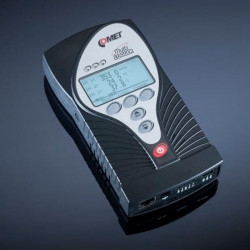
Multilogger M1220 – Thermo-Hygrometer with...
Product Overview The Multilogger M1220 is a versatile universal datalogger featuring 4 inputs for precise temperature and humidity measurements. It supports two inputs for temperature-humidity probes and two for thermocouples types K, J, S, B, T, and N.
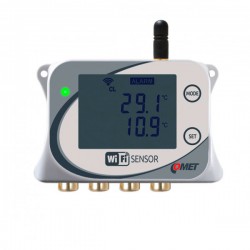
765,00€W0741 WiFi Temperature Sensor
W0741 WiFi Temperature Sensor for 4 External Pt1000 Probes Brand: Comet System The W0741 WiFi Temperature Sensor is designed to accurately monitor temperature using up to four external Pt1000 probes (sold separately). This advanced solution ensures wireless temperature monitoring across a wide range of professional and industrial environments.
295,00€WLD2 - WiFi/Ethernet Water Leak Detector...
Brand: HW Group WLD2 - WiFi/Ethernet Water Leak Detector | HW Group Smart Water Leak Detection with Instant Alert The WLD2 is a highly reliable WiFi and Ethernet water leak detector with support for WWW, SNMP, email notifications, and PoE power supply, ideal for business and technical environments that require continuous protection against water damage.
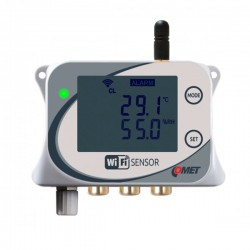
390,00€WiFi Temperature and Relative Humidity...
Brand: Comet System The COMET WiFi sensor is a professional solution designed for accurate monitoring of temperature and relative humidity in a wide range of environments. This cutting-edge device supports one combined temperature and humidity probe (ELKA connector) and up to three Pt1000 temperature probes (CINCH connector).
374,00€CO2, carbon dioxide Web sensor Comet...
Brand: Comet System WebSensor with PoE - remote CO2 concentration with Ethernet interface. CO2, carbon dioxide Web sensor with Power over Ethernet feature with remote alarm.
377,00€WiFi Temperature and Humidity Data Logger...
Brand: Lascar Advanced Temperature Monitoring with the EL-WIFI-TH+ DataLogger from Lascar The EL-WiFi-TH+ is a high-precision temperature and humidity logger that uses internal probes for temperature and humidity measurement. Ideal for industrial, laboratory, and commercial applications, it offers wireless WiFi monitoring and secure data storage, ensuring...
184,40€IoT wireless thermometer, LoRaWAN network...
Brand: Comet System The smart, wireless thermometer designed to accurately monitor temperature using an internal probe to be placed directly in the environment to be measured. Ideal for pharmaceutical, industrial, commercial or even building management applications, this LoRaWAN sensor offers a hassle-free, real-time remote monitoring solution.
189,00€IoT wireless thermometer for external...
Brand: Comet System The smart, wireless thermometer designed to accurately monitor temperature using an external Pt1000 probe to be placed directly in the environment to be measured. Ideal for pharmaceutical, industrial, commercial or even building management applications, this LoRaWAN sensor offers a hassle-free, real-time remote monitoring solution.
203,00€WiFi temperature sensor without probe...
Brand: COMET SYSTEM Sensors with WiFi interface are designed to measure the temperature from a connected temperature probe (optional accessories).
285,00€Aranet PRO Plus Wireless Base Station...
Brand: Aranet The Aranet PRO Plus base station is a monitoring solution that can be applied from a small location to an industrial-scale installation. It has a robust coating with IP67 protection class, this standard ensures the product's protection and resistance against infiltration of liquids and solid materials. Suitable for external use.
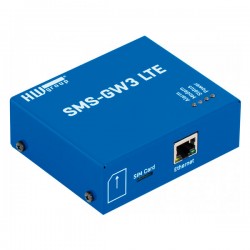
515,00€LTE gateway for sending SMS messages from...
Brand: HW Group SMS-GW3 LTE is a central gateway that allows HWg devices, SensDesk portals, and third-party software/hardware to send text messages (SMS) and make voice calls alerts.
514,50€Remote location temperature monitoring...
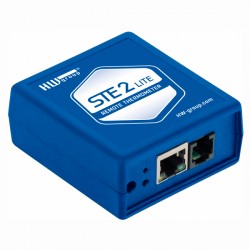
Brand: HW group STE2 LITE is a simple-to-use LAN & WiFi thermometer for remote locations measurement. Whenever a temperature exceeds the specified range an e-mail notification is sent. With external SMS-GW-LTE or Portal service it can also alert you with an SMS or Voice call.
189,00€WiFi temperature and relative humidity...
Brand: COMET SYSTEM Sensors with WiFi interface are designed to measure the temperature and relative humidity with a connected probe (included in delivery).
355,00€Wireless IoT temperature and humidity...
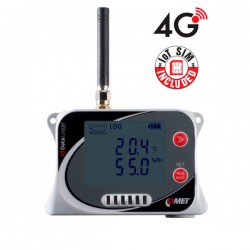
Brand: Comet Wireless IoT datalogger with built-in 4G GSM modem and flat rate SIM card allows instant connection to COMET Cloud.
581,00€Wireless IoT Temperature and CO2 Meter,...
Brand: Comet System The device measures with internal sensors the temperature in the range between -20 to +60°C with an accuracy of ±0.4°C and the CO2 concentration between 0 to 5000 ppm with an accuracy of ±(50ppm +2% of the reading) at 25°C and 1013hPa.
458,00€ 262,50€
EL-WiFi-VACX Vaccine Temperature Data...
Brand: Lascar EasyLog EL-WiFi-VACX – High-Accuracy Vaccine Temperature Monitor with WiFi Connectivity The EasyLog EL-WiFi-VACX is a high-precision wireless temperature data logger designed for remote vaccine monitoring via WiFi connection, featuring built-in sound and light alerts. Ideal for vaccine refrigerators and freezers.
262,50€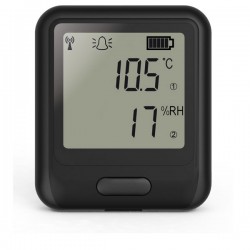 144,70€
WiFi Temperature and Humidity Data Logger...
Brand: LascarThe EL-WIFI-TH Temperature and Humidity Data Logger with internal probe measures the temperature and humidity of the environment in which the datalogger is situated. Data is transmitted wirelessly via a WiFi network to a PC and viewed using free Software available to download or to EasyLog Cloud with subscription cost.
144,70€ 190,90€
WiFi Temperature Data Logger with...
Brand: Lascar Advanced Temperature Monitoring with the EL-WiFi-TC DataLogger from Lascar The EL-WiFi-TC from Lascar is a high-precision temperature logger that uses J, K, N & T thermocouple probes for temperature measurement. Ideal for industrial, laboratory, and commercial applications, it offers wireless WiFi monitoring and secure data storage,...
190,90€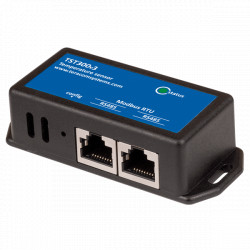 61,10€
High-Precision Digital Temperature Sensor...
Digital Temperature Sensor The TST300 is a high-accuracy digital temperature sensor with MODBUS RTU communication, designed for professional monitoring in mission-critical environments. Operating from -20°C to +60°C and powered directly through the interface, it requires no external power supply.
61,10€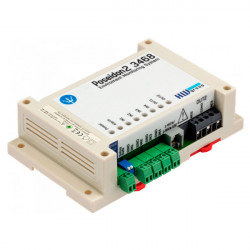 499,00€
Industrial IoT Monitoring Gateway -...
Industrial IoT Monitoring Poseidon2 3468 is a secure Industrial IoT (IoT) monitoring and control device for facilities, data centers and telecom sites. It supports up to 8 1-Wire/1-Wire UNI sensors, 4 dry-contact digital inputs with non-volatile 32-bit S0 pulse counters, two 230 V / 10 A relay outputs, and 8 Virtual Digital Outputs (VDO) on remote...
499,00€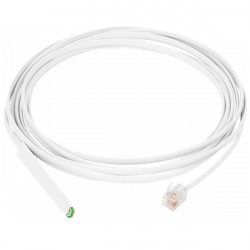 113,00€
Digital Temperature & Humidity Sensor...
HTemp-1Wire — Digital Temperature & Humidity Sensor The HTemp-1Wire delivers accurate temperature (-30 °C to +80 °C) and relative humidity (0–100 %RH) measurements in a compact rod-style probe for both indoor and outdoor use. It communicates over RJ11 (1-Wire) and is purpose-built for seamless integration with Poseidon, Ares and HWg-STE/STE2...
113,00€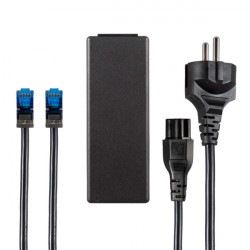 40,00€
IEEE 802.3af PoE Injector for Aranet PRO...
IEEE 802.3af PoE Injector The active IEEE 802.3af PoE injector delivers a stable 56 V power supply over Ethernet to Aranet PRO Plus/PRO Plus LTE or any 802.3af-compliant device—combining power and data in a single cable to cut installation time and cost. Note: not compatible with the Aranet PRO base station (Only Aranet PRO Plus).
40,00€